EMERGENCY AIRDROP PACKAGE
This is a project from University of Alberta DES 494.
An airdrop package with a guideline booklet is designed as a solution to the hypothetical 72-hour disaster. The package contains food, water, and other supplies enough for 2 adults to survive for 72 hours.
The package aims at an earthquake situation. The package is designed to survive a 3 stories drop. The bright orange and blue helps the package to stand out in an outdoor environment.


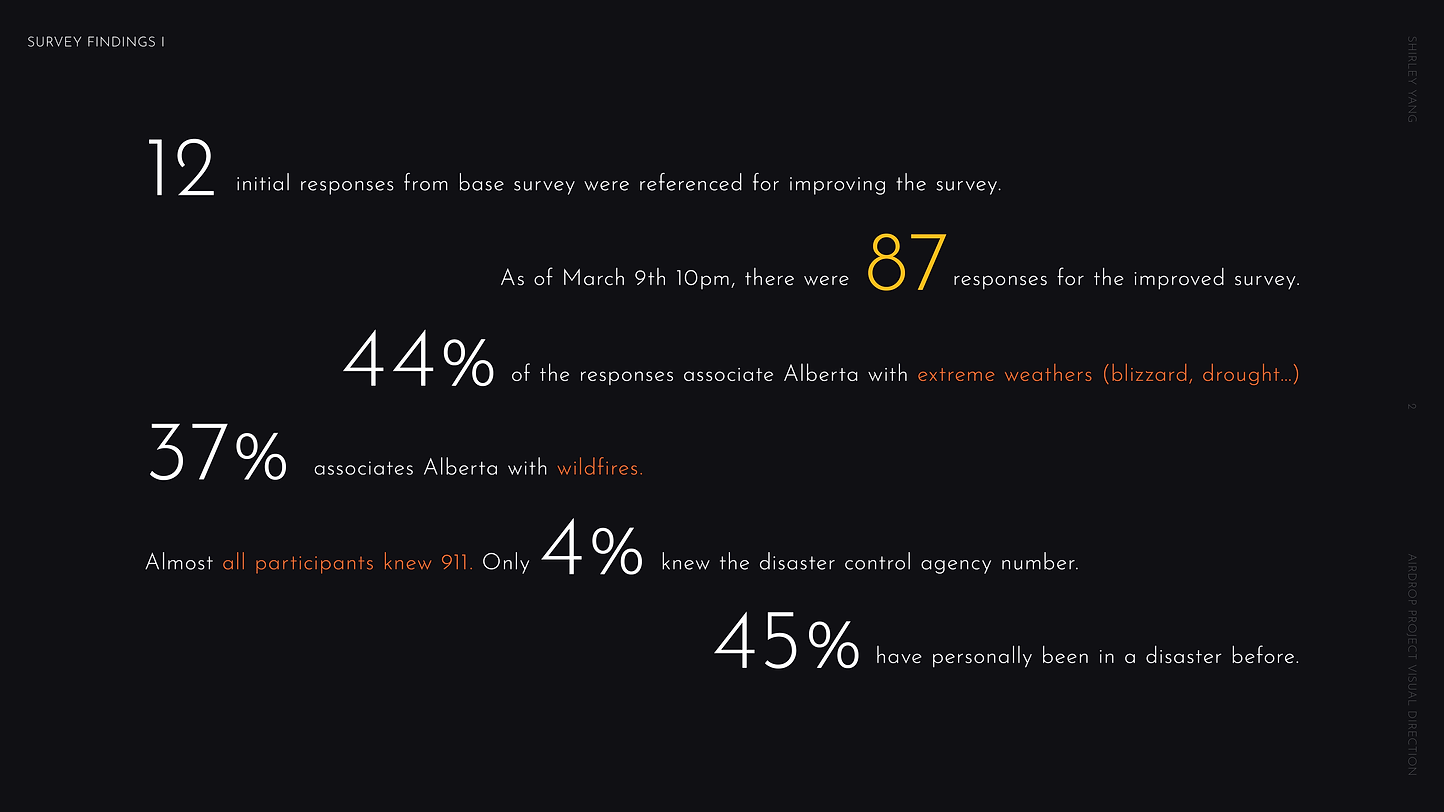
Initial research results
The initial two visual directions were combined to create a cohesive system across all packaging. The contents of the kit were divided in 3 parts: food and water, first aid, and tools and supplies. The packaging design focuses on helping the user identify its content fuss free. Symbols and text work together to speed up this process. Both English and French are used in this solution, where English is prioritized since the projected audience is from Alberta, Canada.
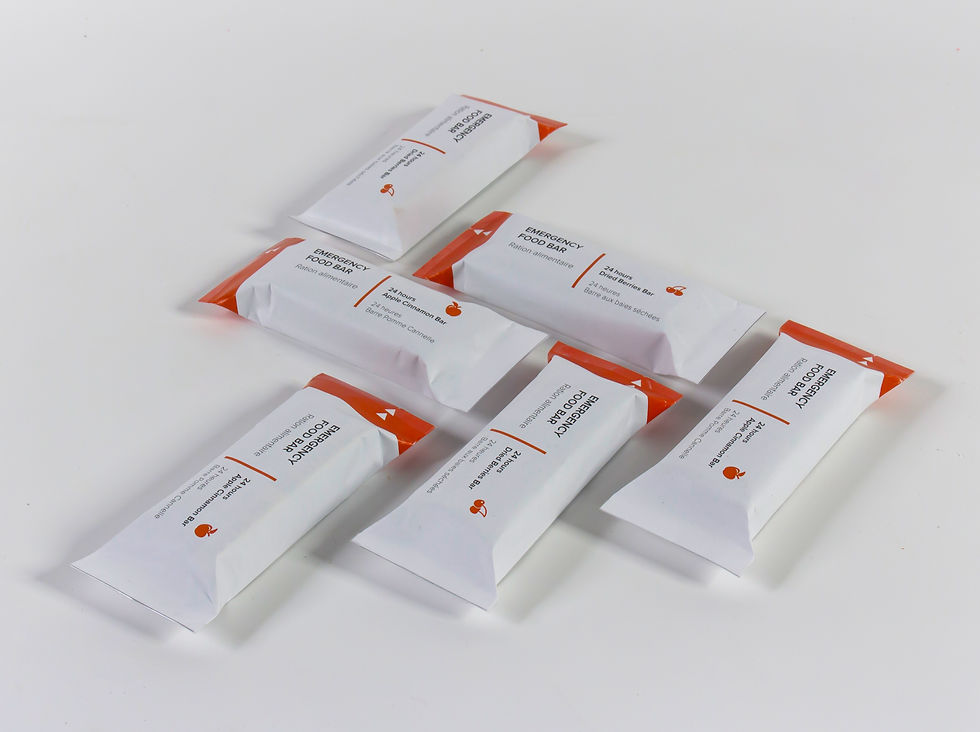

Food bars


The water pouches have dotted lines in the back to help segment the amount of water intake per day per person, so that the user don't have to measure it themselves.
Water pouches
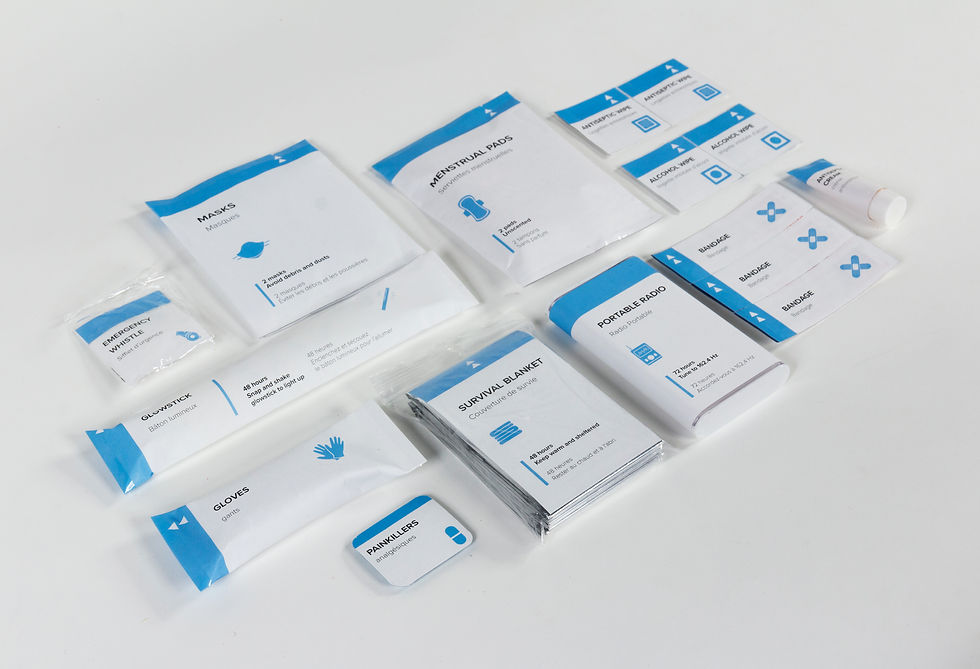


First aid, tools and supplies
Emergency Manual

The event assets continue to apply the system developed through the broadsheet.
The design prioritizes spread of information so that people passing by can quickly grasp time and location of the event. The name badges also expressed personal expertise and identity through the use of department logo specific to their study route.
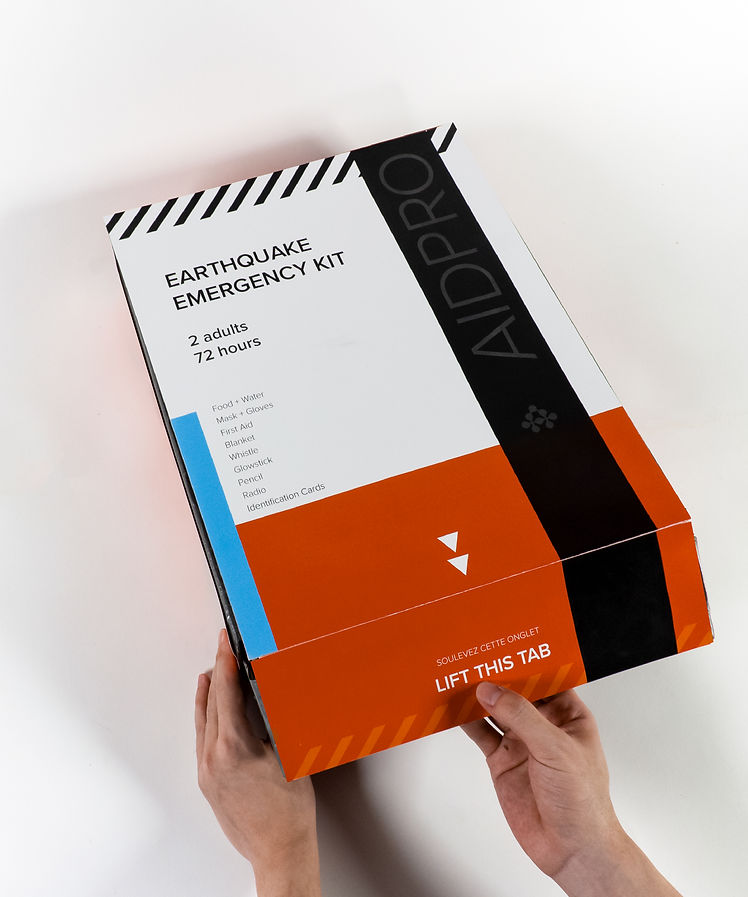
Exterior packaging
Emergency Manual Spreads

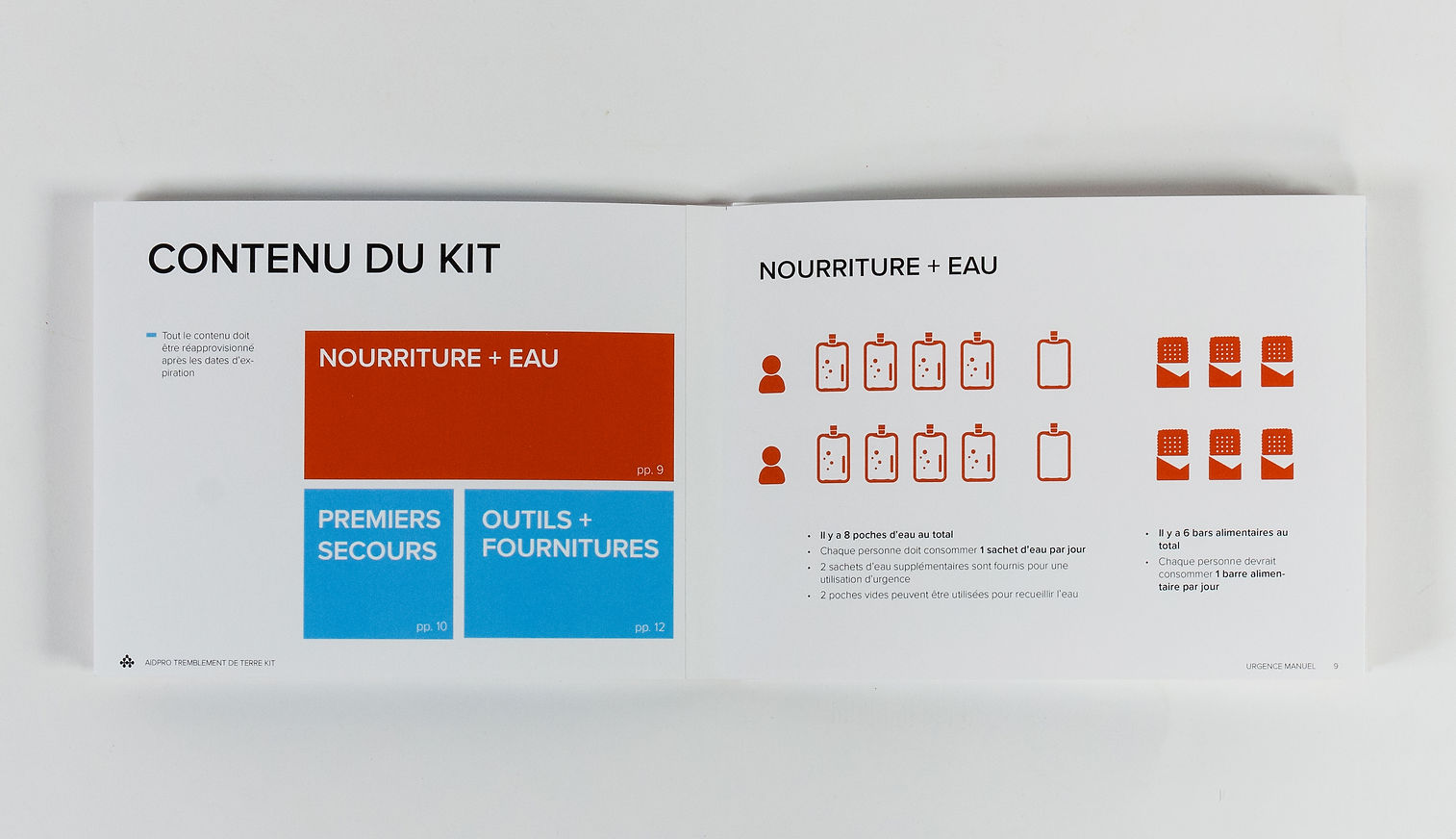

The manual opens in an accordion fold, with one side being the English manual and the other side French. The manual includes first steps after an Earthquake as well as instructions on how to evacuate and survive in the next 72 hours. It also has diagrams for first aid and kit contents, identification cards and stickers, and a help sign.
To see the full manual, click here.
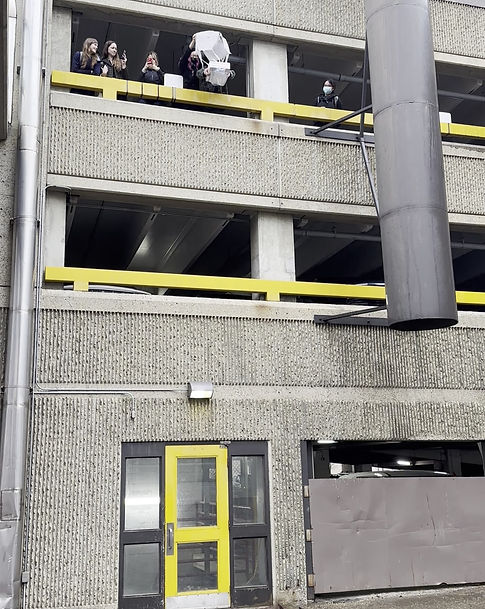
The case was wrapped in plastic and paracord to insure durability. A parachute was attached to the top to steer for stability, and airbags were attached to the bottom to absorb impact. Unfortunately in the airdrop test, two water pouches broke, in the future tests, more foam should be added to the bottom.